YouTube''s 2026 Copyright Notice: What It Reveals About the Future of Digital

Technology Editor
YouTube's 2026 Copyright Notice: What It Reveals About the Future of Digital Platforms and Content Policy
The 2026 Copyright Anomaly: A Glimpse Into Platform Planning
At the bottom of every YouTube page, a seemingly innocuous line reads: "©2026 Google LLC." For most users, this passes unnoticed—a routine piece of footer text. But in the world of digital platform strategy, a copyright year that extends three years into the future is far from ordinary.
Traditional copyright notices display only the current year. A platform showing "©2026" in 2023 signals something deeper: deliberate, long-term strategic planning. For Google LLC, this is not an oversight or a placeholder. It reflects a calculated commitment to legal continuity and brand stability across jurisdictions worldwide.
This forward-looking copyright practice is rooted in legal prudence. By pre-stating a future year, YouTube signals to regulators, advertisers, and content creators that it intends to maintain its legal standing and operational presence well beyond the current fiscal cycle. In an era where platform shutdowns, regulatory takedowns, and sudden policy reversals have become common, such a small detail carries outsized weight.
[IMAGE: Screenshot of YouTube footer with 2026 copyright highlighted, next to a calendar showing 2026]
The contrast with competitors is telling. Many digital platforms update their copyright year reactively—often months into the new year. YouTube's proactive stance suggests a corporate culture that prioritizes compliance infrastructure and long-horizon planning. It also telegraphs to investors and partners that the platform anticipates continued operation under predictable legal frameworks.
Beyond the Footer: The Hidden Economic Logic of Standard Legal Links
Standard footer links—Privacy, Terms, Copyright—may appear mundane, but they represent the backbone of YouTube's global risk management strategy. These links are not afterthoughts; they are carefully engineered legal touchpoints that underpin billions of dollars in advertising revenue and creator payouts.
The economic cost of non-compliance is staggering. YouTube operates in hundreds of jurisdictions, each with distinct data protection laws, copyright regimes, and consumer rights frameworks. The European Union's General Data Protection Regulation (GDPR), for example, imposes fines of up to 4% of global annual turnover for violations. For a platform generating over $30 billion in annual ad revenue, even a single compliance failure could cost over a billion dollars.
Recent policy shifts have reshaped how these links function. The Children's Online Privacy Protection Act (COPPA) in the United States forced YouTube to redesign its data collection practices for content targeting minors. The link to "Terms of Service" now contains specific carve-outs for child-directed content, and the "Privacy" link includes granular explanations of data processing for under-13 users.
[IMAGE: World map with legal icons (gavel, shield) overlaid on YouTube's homepage]
The economic logic extends beyond penalty avoidance. These links build user trust, which directly correlates with engagement and ad revenue. A 2022 study by the Pew Research Center found that 79% of users are more likely to use a platform that clearly explains its data practices. For YouTube, trust translates into longer watch times, higher click-through rates on ads, and increased creator retention.
Content Upload & Share: The Supply Chain of User-Generated Video
YouTube's role as a distribution backbone has transformed the economics of content creation. What was once a simple "upload and share" mechanism has evolved into a sophisticated global supply chain that rivals traditional media networks in scale and complexity.
The technology trends enabling this ecosystem are remarkable. Adaptive bitrate streaming ensures viewers in rural India with 2G connections can watch the same video as a user in Tokyo with gigabit fiber. AI-powered recommendation algorithms process petabytes of data daily to surface relevant content. Cloud storage infrastructure, built on Google's own data centers, allows creators to upload 4K video files that are instantly transcoded into dozens of formats for global distribution.
[IMAGE: Infographic showing the flow from creator upload to viewer device, with arrows indicating policy checkpoints (copyright, moderation)]
Market dynamics have intensified. YouTube now competes directly with TikTok for short-form video dominance, with Twitch for live streaming loyalty, and with emerging Web3 platforms that promise decentralized content ownership. The battle for creator loyalty has shifted from simple revenue sharing to comprehensive support systems—including health insurance for top creators, studio space, and legal assistance for copyright disputes.
Ad revenue remains the primary economic engine, but diversification is accelerating. YouTube's subscription service, YouTube Premium, and its music streaming arm provide alternative revenue streams that buffer against ad market volatility. For creators, the platform's Partner Program now offers multiple monetization pathways beyond ads, including channel memberships, Super Chat, and merchandise shelf integration.
Innovation Patterns in Platform Governance and Content Moderation
Balancing openness with responsibility has become YouTube's defining challenge. The platform's evolution from a laissez-faire video repository to a heavily moderated content ecosystem reflects broader societal pressures and regulatory demands.
Automated content identification systems, primarily Content ID, have become the gold standard for copyright enforcement in user-generated content platforms. These systems scan every upload against a database of over 100 million reference files, processing over 500 years of video daily. The economic impact is substantial: Content ID has paid out over $10 billion to rights holders since its inception.
[IMAGE: Side-by-side comparison of old vs. new moderation dashboards with AI flag symbols]
Yet automation alone is insufficient. YouTube has invested heavily in human review systems, employing over 20,000 moderators worldwide to handle nuanced cases that AI cannot resolve. This hybrid approach—machine efficiency combined with human judgment—has become the industry standard for platform governance.
Emerging trends point to even more sophisticated systems. AI-driven policy enforcement now identifies not just copyrighted content but also harmful misinformation, hate speech, and coordinated inauthentic behavior. Transparency reports, published quarterly, provide detailed breakdowns of enforcement actions, giving regulators and the public visibility into platform decisions.
For global businesses, these developments carry significant implications. Brands must navigate tightening regulatory landscapes while maintaining authentic connections with audiences. Advertisers demand brand safety guarantees, forcing platforms to develop ever-more granular content classification systems. Creators face a complex web of policies that can demonetize or remove content with little warning.
The 2026 Lens: What the Next Two Years Hold for YouTube and the Video Industry
Looking ahead through the lens of that 2026 copyright year, several trajectories become visible. The next two years will likely bring more granular policy controls, allowing creators and advertisers to specify content parameters with unprecedented precision. Footer links may become localized, showing jurisdiction-specific legal notices based on user location.
Increased creator monetization options are almost certain. YouTube has experimented with tipping, ticketed events, and revenue sharing for Shorts. By 2026, expect these options to expand into full-fledged creator marketplaces, where influencers can sell products, courses, and experiences directly through the platform.
Potential disruptions loom. Regulatory crackdowns on algorithmic amplification are gaining momentum. The European Union's Digital Services Act, fully effective in 2024, will require platforms to conduct systemic risk assessments and provide greater transparency around recommendation algorithms.
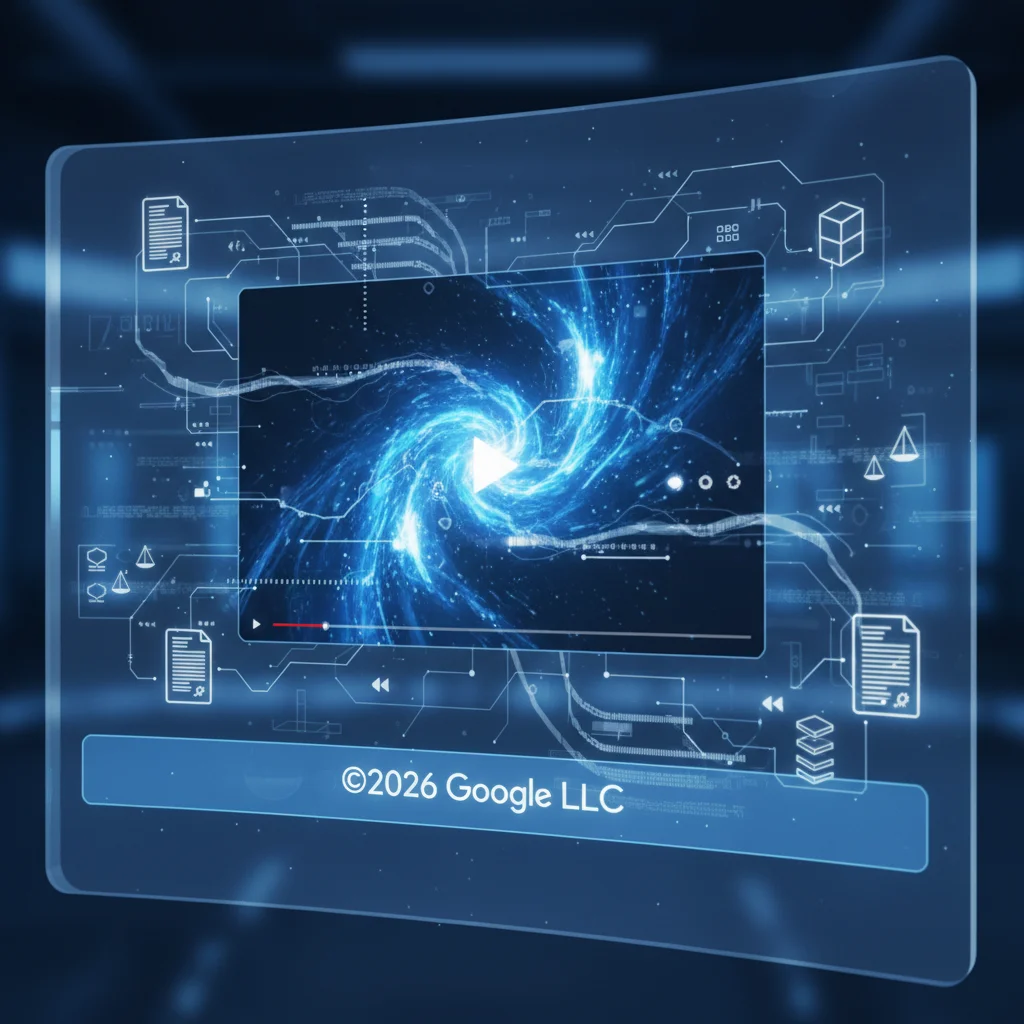
[IMAGE: Futuristic digital interface with copyright notice ©2026 Google LLC, surrounded by abstract data streams and legal icons]
Digital services taxes, already implemented in several European and Asian countries, may become more widespread, eating into platform margins. Competition from Web3 video platforms, which promise decentralized ownership and direct creator-to-audience relationships, could fragment the market.
Yet YouTube's fundamental advantage remains its infrastructure. The platform's investment in content distribution, copyright management, and advertiser relationships creates formidable barriers to entry. A simple copyright year is a powerful reminder that platform design, legal compliance, and market dynamics are inseparable. The next time you scroll past "©2026 Google LLC," consider what it represents: not just a date, but a declaration of intent from one of the world's most influential digital platforms.

