Emerging Market Trends 2025: Africa''s Tech Funding Gap, Plastic Recycling,

Breaking News Correspondent
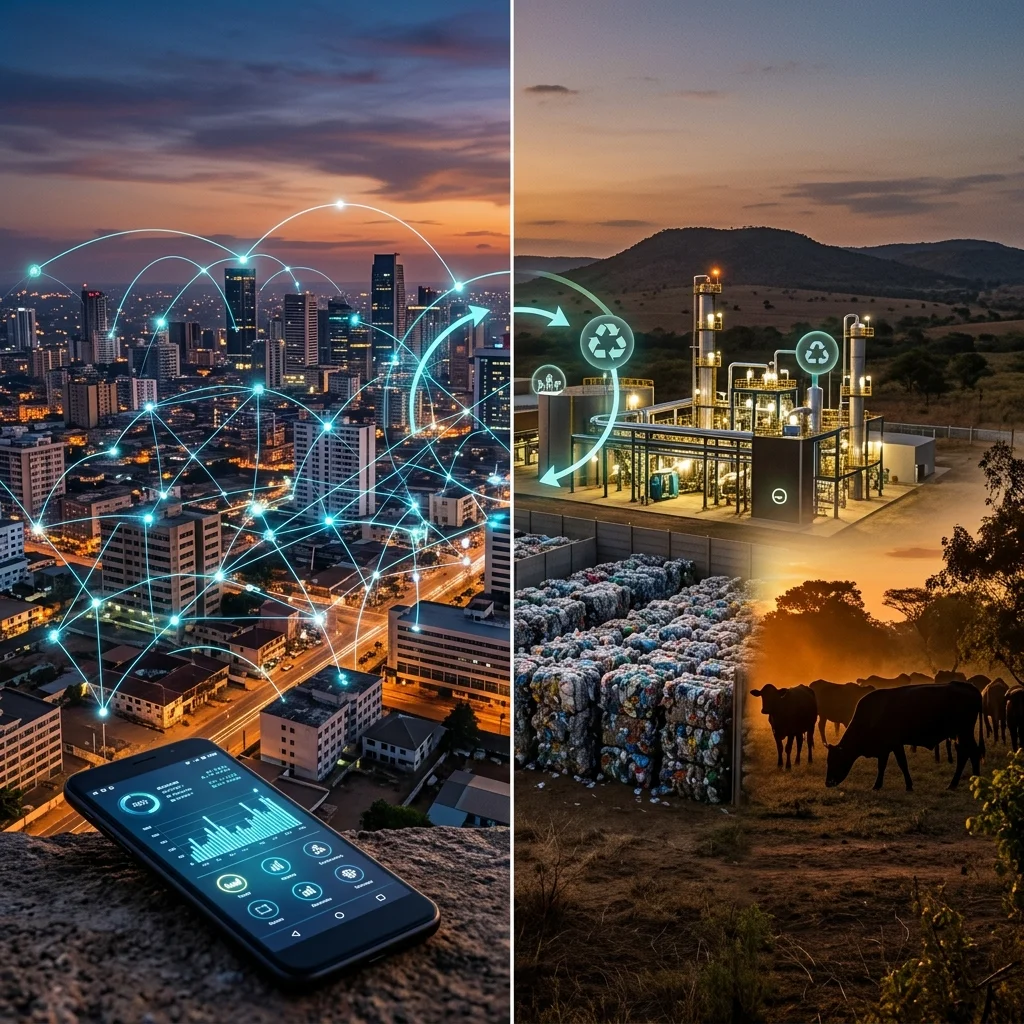
Emerging Market Trends 2025: Africa's Tech Funding Gap, Plastic Recycling, and Animal Protein Innovation
Introduction: The Paradox of Progress in Emerging Markets
The International Finance Corporation’s (IFC) Emerging Market Insights research, produced by a team of economists and industry specialists, paints a nuanced picture of developing economies at a critical inflection point. The data reveals a stark paradox: while the potential for digitization and sustainability-driven growth has never been greater, persistent infrastructure gaps and acute funding shortages are undercutting progress. This article dissects three interconnected axes—Africa’s tech startup dilemma, the circular economy of plastics, and the affordability of animal protein—to understand where opportunity meets constraint in markets that will shape the next decade of global development.
[IMAGE: A world map highlighting key regions with data callouts: Africa, Southeast Asia, India, Nigeria, Ghana.]
---
Africa's Startup Scene: Promise vs. Reality
Across sub-Saharan Africa, over 600,000 formal firms and an estimated 40 million microbusinesses could digitize core operations—accounting, supply chain management, payments, inventory tracking—representing a massive productivity lever. Yet early-stage equity funding flowing into African tech startups remains a fraction of what comparable ventures receive in other emerging market regions. The IFC report underscores the tension: “The continent’s fledgling startup scene could make businesses more productive and fuel development – if they can weather a sharp downturn in funding.”
That downturn is severe. Global venture capital pullback has hit African startups disproportionately, with funding in 2024 estimated at roughly $2.5 billion, down from a peak of $6.5 billion in 2022. The gap is not just a matter of volume; it is structural. African startups receive less than 1% of global venture capital, yet the continent accounts for roughly 17% of the world’s population. The funding drought threatens to stall the digitization of hundreds of thousands of small and medium enterprises that form the backbone of local economies.
[IMAGE: Bar chart comparing early-stage funding per capita in Africa vs. other emerging markets with a dotted line showing the recent downturn.]
---
The Digitization Opportunity Amid Infrastructure Gaps
Perhaps the most striking contradiction is the coexistence of high mobile penetration and unreliable electricity. Africa now boasts roughly 90 mobile subscriptions per 100 people—a figure that has enabled mobile money platforms like M-Pesa in Kenya and MTN MoMo in Ghana to leapfrog traditional banking. However, nearly 40% of the population lacks access to reliable electricity. This digital–energy paradox means that even as smartphones proliferate, their utility is curtailed by the inability to charge devices consistently or power cloud-based services.
Mobile-led digitization has proven that technological leapfrogging is possible even with weak grid infrastructure. Fintech, agritech, and healthtech solutions have reached rural populations that banks and clinics never did. But the lack of stable power limits device usage, data storage, and the scalability of software-as-a-service models. Off-grid solar and battery storage solutions are emerging as critical enablers. In Nigeria, companies like M-KOPA bundle smartphones with solar home systems, allowing customers to pay in installments via mobile money. Similar bundled offerings—digitization tools paired with energy-as-a-service for SMEs—could unlock productivity gains for millions of micro-enterprises.
The IFC’s research suggests that investors should look beyond pure tech plays and consider integrated models that address both connectivity and energy. This is where blended finance can play a catalytic role, de-risking investments in off-grid infrastructure that simultaneously support digital adoption.
[IMAGE: Photo of a small business owner in rural Nigeria using a mobile phone under a solar-powered light, with a small battery unit in the background.]
---
Plastic Waste: A Growing Crisis and Circular Economy Solutions
Outside the digital realm, another trend is reshaping emerging markets: the explosive growth of plastic waste. As consumption rises in developing economies—driven by urbanization and population growth—municipal solid waste generation is projected to double by 2050, with plastic content increasing disproportionately. In Southeast Asia, countries like Indonesia, the Philippines, and Vietnam are among the world’s top ocean plastic polluters, while African nations like Nigeria and Ghana struggle with inadequate collection and recycling infrastructure.
This crisis, however, is spurring investment in chemical recycling technologies that can break down mixed or contaminated plastics that mechanical recycling cannot handle. Chemical recycling—through pyrolysis, depolymerization, or gasification—converts plastic waste into monomers, fuels, or chemical feedstocks, enabling a true circular economy. The IFC highlights that several pilot plants are now operational in India, Thailand, and South Africa, with scale-up plans requiring patient capital.
The economics remain challenging: virgin plastic feedstock is often cheaper due to subsidized oil prices, while chemical recycling requires high capital expenditure and consistent waste supply. Yet regulatory tailwinds are building. The United Nations’ Global Plastic Treaty negotiations, expected to conclude by the end of 2025, could mandate minimum recycled content and extended producer responsibility schemes, making chemical recycling more viable. For investors, the opportunity lies in vertically integrated models that secure waste supply, operate recycling facilities, and sell recycled feedstock to petrochemical companies.
[IMAGE: Infographic showing the flow of plastic waste from collection, sorting, to chemical recycling plant with output arrows for monomers and fuels.]
---
Animal Protein Affordability: Bridging the Nutrition Gap
The third frontier is food security—specifically, the affordability of animal protein. According to the IFC research, animal protein is nearly 60% more expensive in low-income countries compared to high-income ones when adjusted for purchasing power. This “protein premium” has profound nutritional implications: children in sub-Saharan Africa consume a fraction of the recommended daily protein intake, contributing to stunting and developmental delays.
The high cost stems from inefficient supply chains, climate stress on livestock, and limited access to feed and veterinary inputs. In many African markets, smallholder farmers rely on indigenous breeds that are resilient but low-yielding. Meanwhile, heat stress from rising temperatures reduces milk and meat output in tropical regions. Innovation is emerging on two fronts: climate-resistant breeds and precision livestock farming.
Research institutes in Kenya and Ethiopia are developing crossbred cattle that combine the heat tolerance of local Zebu with the milk yield of Holsteins. In Ghana, improved poultry lines with better feed conversion ratios are being distributed through cooperative networks. At the same time, digital tools—such as IoT-enabled sensors for monitoring animal health and mobile-based advisory services—are helping farmers optimize feeding and disease management. These agri-tech solutions, while nascent, offer parallel avenues for sustainable growth alongside digitization and circular economy investments.
[IMAGE: A side-by-side comparison of a traditional indigenous cow and a crossbred improved cow in a pasture, with icons showing milk output and heat tolerance metrics.]
---
Conclusion: Hidden Linkages and Investor Implications
The three trends explored here—Africa’s tech funding gap, plastic waste recycling, and animal protein innovation—are not isolated. They reveal hidden linkages that investors and development institutions can exploit. Mobile-led digitization can leapfrog legacy infrastructure gaps, but it requires targeted capital for energy access and last-mile connectivity. Circular economy models for plastics can generate revenue from waste while reducing environmental harm, but they depend on regulatory certainty and affordable finance. And agricultural innovation can improve nutrition and rural incomes, but scaling climate-resilient livestock systems requires blending concessional and commercial funding.
For investors, these insights signal concrete opportunities in three areas:
- Blended finance vehicles that de-risk off-grid solar-plus-digitization bundles for SMEs in Africa and South Asia.
- Chemical recycling infrastructure in waste-intensive emerging markets, paired with supply-chain partnerships.
- Productivity-enhancing agricultural technologies—from improved genetics to IoT sensors—tailored for smallholder contexts.
The IFC’s research reminds us that emerging markets are not a monolith. The same funding downturn that stifles startups in Nairobi also creates an opening for patient capital. The same plastic waste crisis choking Manila’s rivers fuels demand for recycling plants in Ho Chi Minh City. And the same protein gap that threatens child development in rural Zambia also drives demand for more efficient farming methods. Understanding these dual realities—opportunity and constraint—is the first step toward deploying capital where it can generate both returns and impact.
[IMAGE: Composite image: left side shows an African startup founder on a smartphone against a backdrop of solar panels; right side shows a chemical recycling facility with pipes and storage tanks, with a headline quote: 'Invest in what connects – energy, data, and waste.']
---
This article draws on the IFC’s Emerging Market Insights research, which provides independent analysis of trends in developing economies. For the full report, visit the IFC website.

