16 Business Trends for 2026: How to Stay Ahead in a Rapidly Changing World

Breaking News Correspondent
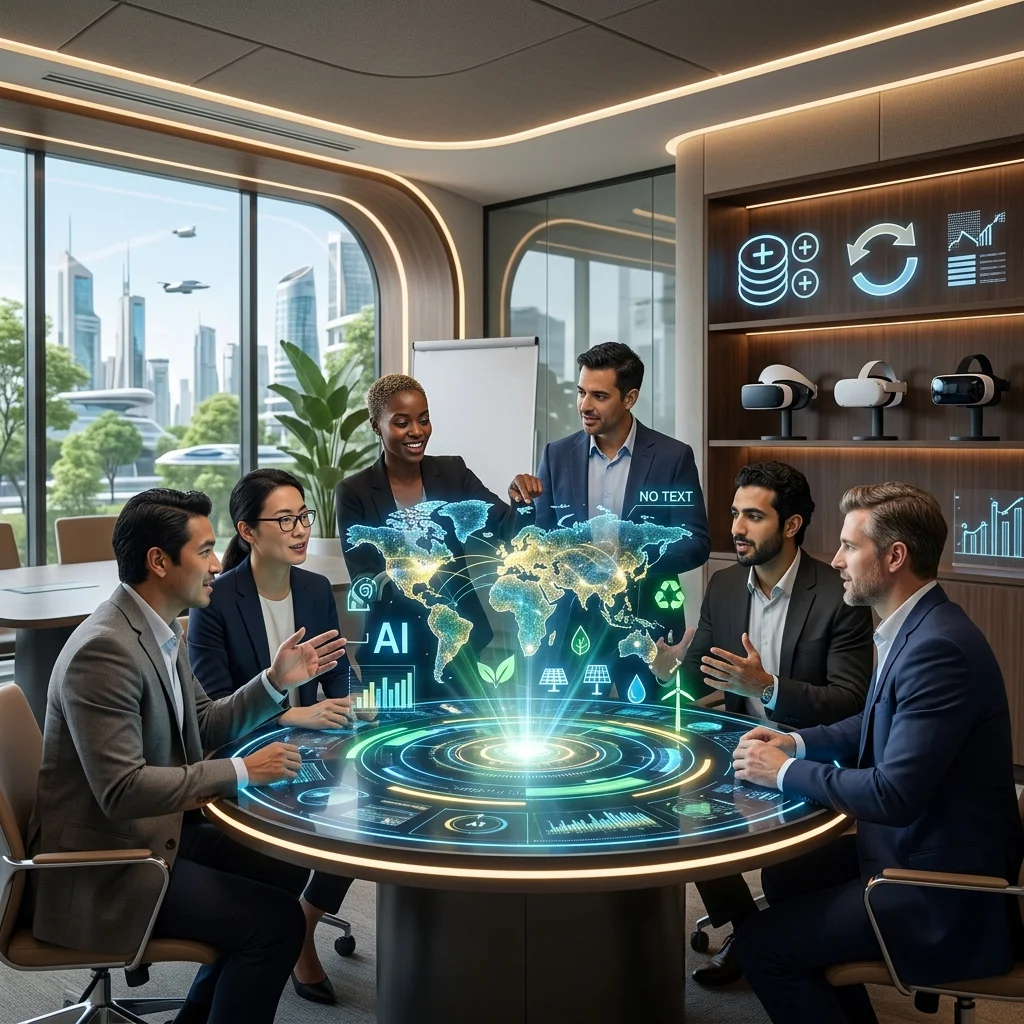
16 Business Trends for 2026: How to Stay Ahead in a Rapidly Changing World
Introduction: The Convergence of Human and Machine
The business landscape of 2026 will not be defined by any single technology or market shift. Instead, it will emerge from the intersection of automation and humanity—a place where generative AI writes code, but soft skills write contracts; where immersive environments train workers, but diversity, equity, and inclusion (DEI) strategies retain them. These 16 trends for 2026 reflect a deeper structural transformation: from product-centric to relationship-centric business models. The winners will be those who balance AI-driven efficiency with human-centric values—employee well-being, ethical growth, and long-term resilience.
To navigate this complexity, we can group the trends into four categories: economic (subscription models, e-commerce growth), social (skills-based hiring, Gen Z marketing), technological (generative AI, immersive tech), and regulatory (sustainability compliance, data privacy). Each trend is supported by data from Statista, TestGorilla, Forbes, and other authoritative sources. This article provides a strategic roadmap for leaders seeking to future-proof their organizations.
[IMAGE: Infographic showing four trend types (economic, social, technological, regulatory) intersecting with 2026 business landscape]
1. AI & Immersive Tech: From Tools to Core Strategy
Generative AI has moved beyond the experimental phase. Tools like ChatGPT, Midjourney, and Adobe Firefly now handle text, audio, video, code, and design at scale. In 2026, companies that treat AI as a core strategic asset—rather than a point solution—will gain significant speed and personalization advantages. For example, marketing teams use AI to generate dynamic email campaigns tailored to individual customer segments, while product teams use it to prototype features in hours instead of weeks.
Immersive technologies—augmented reality (AR), virtual reality (VR), and mixed reality (MR)—are also maturing. According to McKinsey, the enterprise adoption of AR/VR for employee training has reduced onboarding time by 40% and improved knowledge retention by 75%. TechTarget reports that manufacturers now use VR for remote equipment maintenance, and retailers deploy AR for virtual try-ons. These are no longer novelty experiments; they are cost-saving, revenue-generating tools.
The economic impact is measurable. Statista projects that US e-commerce revenue will grow by $498.2 billion between 2025 and 2029. AI and VR are key growth levers for this expansion—AI powers personalized product recommendations and dynamic pricing, while VR creates immersive shopping experiences that reduce return rates. The hidden economic logic: when automation meets human-centric design, trust and conversion rates both rise.
[IMAGE: Split screen: left side shows AI generating a marketing video, right side shows a VR training session in manufacturing]
2. The Future of Work: Remote, Skills, and Soft Power
Remote work is no longer a temporary accommodation; it is a permanent fixture of the global labor market. Companies like HubSpot and LinkedIn have fully embraced distributed teams, enabling access to talent pools beyond geographic boundaries. However, the real shift is not just where work happens but who gets hired and how they are valued.
The most significant trend in talent acquisition is skills-based hiring. A 2023 report by TestGorilla found that over 70% of companies now favor skills assessments over traditional resumes. This move reduces bias and uncovers hidden talent—candidates without formal degrees but with demonstrable abilities. For 2026, this trend will accelerate as job roles evolve faster than degree programs can adapt.
Simultaneously, employers are placing higher value on soft skills: communication, adaptability, empathy, and collaboration. As AI automates routine tasks, human skills become the differentiator. Companies that invest in training for these "soft power" competencies see higher employee engagement and lower turnover.
To attract and retain top talent in this environment, benefits packages are expanding beyond salary and health insurance. Recognition programs, mental health support, caregiver leave, housing subsidies, and continuous learning stipends are becoming competitive differentiators. The future of work in 2026 is not about where you sit, but how well you grow.
[IMAGE: Diverse remote team collaborating on a video call, with a sidebar showing 'Skills-Based Hiring' growth chart]
3. Revenue Model Reinvention: Subscriptions, Partnerships, and E‑commerce
The subscription economy continues its relentless expansion. Harvard Business Review notes that subscription-based pricing generates predictable recurring revenue and deepens customer relationships—from software (SaaS) to physical goods (meal kits, pet supplies) to services (car washes, fitness). In 2026, the model is spreading to industries previously resistant to recurring billing, such as automotive (vehicle-as-a-service) and healthcare (telemedicine memberships).
Brand partnerships are another revenue lever gaining traction. By leveraging complementary audiences, companies can cross-promote products and access niche markets without heavy ad spend. For example, a sustainable clothing brand might partner with a plant-based food company to create a "conscious living" bundle. These collaborations reduce customer acquisition costs and build trust through association.
E-commerce growth, as forecast by Statista, forces retailers to adopt omnichannel strategies and AI-driven personalization. The line between online and offline blurs: customers expect to browse on Instagram, purchase via a mobile app, pick up in-store, and return via mail—all seamlessly integrated. Behind the scenes, the subscription model demands just-in-time inventory and flexible logistics. Companies that fail to optimize their supply chain for recurring demand will see churn spike.
[IMAGE: Diagram showing subscription payment cycles, partnership logos, and e-commerce revenue growth arrow]
4. Sustainability with Substance
Sustainability is no longer a marketing differentiator—it is a baseline requirement. But the trend for 2026 is moving from vague promises to substance: measurable carbon reduction, circular economy practices, and transparent supply chains. Regulatory pressure is mounting: the EU’s Corporate Sustainability Reporting Directive (CSRD) and similar legislation in the US and Asia require companies to report emissions across the entire value chain.
Consumers, especially Gen Z, are voting with their wallets. According to Forbes, 73% of Gen Z shoppers are willing to pay more for sustainable products—but they are also quick to call out greenwashing. In 2026, brands must back up claims with third-party certifications (B Corp, Cradle to Cradle) and data that proves impact. Meanwhile, investors increasingly use ESG (environmental, social, governance) scores to allocate capital.
The economic logic behind sustainability is hidden but powerful: reducing energy use lowers costs; designing for repairability extends product life cycles; and transparent sourcing mitigates reputational risk. Companies that treat sustainability as an innovation driver—not a compliance burden—will build long-term advantage. For example, fashion brands using AI to optimize fabric cutting reduce waste by 30%, while food companies using blockchain to trace ingredients create trust with health-conscious buyers.
[IMAGE: Circular economy diagram showing materials flowing from production to reuse to recycling, with a graph of declining carbon emissions]
5. Gen Z Marketing: Authenticity Over Ads
Generation Z (born 1997–2012) now represents the largest consumer demographic in many markets. Their buying behavior is fundamentally different: they trust user-generated content over polished advertising, value brand purpose over product features, and expect real-time engagement on platforms like TikTok, Instagram, and Discord. In 2026, traditional interruption-based marketing is dead for this cohort.
Brands must adopt authenticity first strategies: collaborating with micro-influencers who genuinely use the product, sharing behind-the-scenes content, and responding to customer feedback publicly. Transparency about pricing, sourcing, and labor practices is non-negotiable. A 2025 study by McKinsey found that 62% of Gen Z consumers have stopped purchasing from a brand that misrepresented its values.
Moreover, Gen Z expects seamless, mobile-first experiences. E-commerce sites must load in under two seconds, payment options should include Buy Now Pay Later (BNPL), and customer service should be available via chat or social DM. The Gen Z marketing playbook is less about selling and more about building community.
[IMAGE: A collage of user-generated content (UGC) from TikTok and Instagram featuring a fictional sustainable sneaker brand, with engagement metrics visible]
6. DEI as a Business Imperative
Diversity, equity, and inclusion (DEI) has moved from HR initiative to core business strategy. Research consistently shows that diverse teams outperform homogeneous ones in innovation, problem-solving, and financial returns. In 2026, the focus shifts from representation metrics to equity outcomes: equal pay, career advancement, and inclusive leadership pipelines.
Companies are using AI tools to audit job descriptions for biased language, to screen resumes anonymously, and to identify pay gaps. But DEI is not just about hiring; it’s about retention. Employee resource groups, mentorship programs, and flexible policies (religious holidays, neurodiversity accommodations) create environments where everyone can thrive.
Regulatory pressure is also intensifying. The US Securities and Exchange Commission (SEC) now requires publicly traded companies to disclose diversity data on their boards. In Europe, the Women on Boards directive mandates gender balance. Organizations that fail to embed DEI into their operating model risk legal exposure and talent flight.
[IMAGE: Diverse group of professionals in a meeting room with a screen showing a "Pay Equity Analysis" dashboard]
7. Data Privacy and Ethical AI
As AI becomes ubiquitous, so does the scrutiny of how data is collected, stored, and used. In 2026, consumers are more aware than ever of their digital footprint. Regulations like GDPR, CCPA, and India’s Digital Personal Data Protection Act create a fragmented compliance landscape. Companies must invest in privacy-by-design frameworks and transparent consent mechanisms.
Ethical AI is another frontier. Biased algorithms can perpetuate discrimination in hiring, lending, and policing. In response, regulators are demanding explainability—the right to know why an AI made a particular decision. Businesses that prioritize fairness audits and human oversight will build trust and avoid costly lawsuits.
The hidden economic opportunity: companies that lead in privacy and ethics can differentiate themselves in a crowded market. Apple’s "Privacy. That’s iPhone." campaign is a textbook example. In 2026, privacy is not a cost center; it is a competitive advantage.
[IMAGE: Lock icon combined with AI neural network nodes, with a checklist showing "Fairness," "Transparency," "Accountability"]
8. Hyper-Personalization at Scale
Consumers now expect brands to know them—their preferences, purchase history, browsing behavior—and to deliver tailored experiences without being creepy. The convergence of AI, real-time data, and omnichannel platforms makes hyper-personalization possible at scale. In 2026, retailers use AI to generate individualized product bundles, streaming services create custom playlists, and healthcare providers offer personalized wellness plans.
The challenge is balancing personalization with privacy. Companies need explicit opt-in data strategies, and they must demonstrate value in exchange for information. For example, a meal-kit service that uses AI to adjust recipes based on past feedback (spice tolerance, dietary restrictions) can justify asking for detailed preferences.
Statista data shows that 80% of consumers are more likely to purchase from a brand that offers personalized experiences. Yet only 15% of companies have fully implemented it. The gap is the opportunity.
[IMAGE: A split screen showing a generic website on the left (one-size-fits-all) and a personalized website on the right (greeting user by name, showing past purchases, recommending products)]
9. Resilient Supply Chains
The pandemic, geopolitical tensions, and climate events have exposed the fragility of global supply chains. In 2026, resilience is the new efficiency. Companies are diversifying suppliers, nearshoring production, and building buffer inventories—even if it means slightly higher costs.
Technology plays a central role. IoT sensors track shipments in real-time, AI predicts disruptions (e.g., port strikes, weather delays), and blockchain ensures transparency from raw material to finished product. According to a 2024 report by Accenture, companies that invest in supply chain resilience see 20% higher revenue growth during disruptions than those that don’t.
The hidden economic logic: a resilient supply chain reduces the risk of stockouts, lost sales, and reputational damage. For subscription-based businesses, reliability is critical—a single failed delivery can trigger a churn cascade.
[IMAGE: World map with arrows showing nearshoring routes (Mexico to US, Eastern Europe to Western Europe, Southeast Asia to Japan) and a dashboard predicting risk levels]
10. The Rise of the Creator Economy
The creator economy—individuals who monetize content through platforms like YouTube, Substack, Patreon, and TikTok—has matured into a significant business force. In 2026, brands are shifting from paying for ad placements to forming long-term partnerships with creators who have built loyal communities.
This trend blurs the line between consumer and producer. Tools like no-code platforms and AI content generation allow anyone to create and sell digital products. Companies should explore ways to empower their own employees or customers as creators—for example, a software company launching a user-generated tutorial marketplace.
The economic impact: the creator economy is projected to reach $500 billion globally by 2027 (SignalFire). Brands that fail to engage with creators risk losing relevance with younger demographics.
[IMAGE: A creator working on a laptop with a green screen, showing revenue streams: sponsorships, merchandise, subscriptions, tips]
11. Mental Health and Employee Well-being
Post-pandemic burnout remains a critical issue. In 2026, employee mental health is a C-suite priority, not just an HR checkbox. Companies are offering no-cost therapy, mindfulness apps, unlimited mental health days, and manager training to spot signs of distress.
The business case is compelling: Gallup reports that employees who feel well-supported are 69% less likely to actively seek new jobs. Conversely, poor mental health costs the global economy an estimated $1 trillion per year in lost productivity (WHO). Employee well-being programs are not just kind—they are financially prudent.
Technology can help, but not replace human connection. AI-powered chatbots provide immediate support, but long-term solutions require a culture of psychological safety. Leaders who model vulnerability and encourage work-life boundaries will attract the best talent.
[IMAGE: An employee taking a break in a calm office space with plants and natural light, next to a graph showing reduced turnover rates]
12. Voice and Conversational Commerce
Voice assistants (Alexa, Google Assistant, Siri) and chatbots have become primary interaction channels. In 2026, conversational commerce—buying products through voice commands or text chatbots—is expected to account for 20% of all e-commerce transactions (Juniper Research). This shift requires brands to rethink their user experience: product descriptions must be optimized for voice search, and chatbots must handle complex queries without escalation.
The underlying driver is convenience. Consumers can reorder groceries, book flights, or pay bills through a single voice command. For businesses, conversational AI reduces customer service costs by 30% while improving satisfaction. However, the technology must be intuitive and empathetic—a frustrating chatbot experience can lose a sale instantly.
[IMAGE: A person speaking into a smart speaker while shopping for groceries, with a voice interface showing "Order placed" confirmation]
13. Decentralized Finance (DeFi) and Blockchain Beyond Crypto
Blockchain technology is moving beyond cryptocurrencies into real-world applications. In 2026, supply chain tracking, digital identity, and smart contracts are mainstream. Decentralized finance (DeFi) enables peer-to-peer lending, insurance, and payments without traditional banks, reducing fees and increasing access.
For businesses, blockchain offers tamper-proof records for compliance, especially in industries like pharmaceuticals (drug traceability) and luxury goods (anti-counterfeiting). While regulatory uncertainty remains, pilot projects are running in logistics, real estate, and voting.
The economic logic: blockchain reduces intermediaries, lowers transaction costs, and builds trust through transparency. Early adopters in niche markets can gain a first-mover advantage.
[IMAGE: A blockchain network visualization with nodes representing smart contracts connecting shipping containers, identity documents, and payment systems]
14. Edge Computing and 5G
As IoT devices proliferate, the demand for real-time data processing is overwhelming centralized cloud servers. Edge computing—processing data closer to the source (e.g., factory floor, retail store, autonomous vehicle)—reduces latency and bandwidth costs. Combined with 5G networks, edge computing enables applications like remote surgery, real-time quality control, and augmented reality support.
In 2026, manufacturers and logistics companies are early adopters. For example, a warehouse using edge AI to scan packages on conveyor belts can flag defects instantly, without sending data to a distant server. The technology also supports offline resilience: if internet connectivity fails, edge devices continue processing.
Statista predicts the global edge computing market will exceed $60 billion by 2026. Businesses that invest now will have a competitive edge in operational efficiency.
[IMAGE: A factory floor with sensors on machines, a local edge server, and a 5G tower, with arrows showing data flow]
15. Circular Economy and Product-as-a-Service
The circular economy—designing products to be reused, repaired, and recycled—is gaining regulatory and consumer momentum. In 2026, more companies are adopting Product-as-a-Service (PaaS) models: instead of selling a washing machine, you lease it, pay per use, and the manufacturer manages maintenance and end-of-life recycling.
This model aligns incentives: manufacturers have an incentive to build durable, repairable products, reducing waste. For consumers, upfront costs are lower, and they get always-up-to-date equipment. Companies like Philips (lighting), Michelin (tires), and Caterpillar (heavy equipment) have already deployed PaaS at scale.
The transition requires redesigning supply chains and revenue models, but the long-term benefits include customer loyalty, predictable revenue, and reduced environmental impact. A 2025 report by the Ellen MacArthur Foundation found that circular business models could generate $4.5 trillion in economic opportunities by 2030.
[IMAGE: A lifecycle diagram for a smartphone: designed for modular repair, then taken back for component harvesting, with arrows indicating loop]
16. Adaptive Leadership and Organizational Agility
The final trend is the most human: adaptive leadership. In a world of constant disruption, command-and-control management fails. Leaders in 2026 must be comfortable with ambiguity, empower frontline decision-making, and foster a culture of experimentation.
Organizational agility requires flat hierarchies, cross-functional teams, and rapid feedback loops. Companies that practice "continuous transformation" (rather than one-time restructurings) outperform peers. According to McKinsey, agile organizations have 70% higher employee engagement and 30% better financial performance.
Technology supports this shift: collaboration platforms (Slack, Notion, Miro) enable transparent communication, while AI analytics provide real-time data for decision-making. But ultimately, it’s about mindset. Leaders who learn to unlearn, who embrace failure as data, and who prioritize purpose over profit will build the most resilient organizations.
[IMAGE: An organization chart transforming from a traditional pyramid to a network of circles/teams with bidirectional arrows]
Conclusion: The Hidden Economic Logic
These 16 business trends for 2026 share a common thread: the fusion of automation and human-centric values. Generative AI, immersive tech, and edge computing drive efficiency, but skills-based hiring, DEI, mental health, and sustainability ensure that growth is equitable and durable. Subscription models and circular economies create predictable revenue while reducing waste.
The hidden economic logic is this: trust is the new currency. In a world of information overload, consumers and employees gravitate toward brands that are transparent, consistent, and ethical. Leaders who invest in both technology and humanity—balancing innovation with resilience—will not only survive but thrive.
The question is not whether to adapt, but how fast. The window for early advantage is closing. Start mapping these trends to your organization today.
[IMAGE: A futuristic city skyline with holographic icons representing each of the 16 trends, connected by lines of light]

